Modern businesses rely on fast, stable, and scalable connectivity more than ever before. From cloud applications and VoIP communications to surveillance systems, IoT devices, and hybrid workforce support, every digital operation depends on a reliable physical network foundation. Yet many companies overlook one critical factor: structured cabling solutions for businesses.
Outdated or poorly designed cabling systems can silently reduce productivity, create costly downtime, weaken security systems, and limit future technology upgrades. As organizations continue adopting 10Gbps networking, smart building technologies, and advanced communications platforms, investing in the right cabling infrastructure is no longer optional — it is essential.
Why Outdated Cabling Is Quietly Hurting Business Performance
Many companies focus on upgrading switches, servers, wireless access points, or cloud platforms while ignoring the infrastructure connecting everything together. However, even the best network hardware can underperform when paired with aging cabling systems.
Older cabling standards often struggle to support modern bandwidth demands. This can result in intermittent connectivity issues, packet loss, slower file transfers, VoIP call quality problems, and unreliable wireless performance.
Businesses commonly experience hidden issues such as:
- Frequent network slowdowns during peak business hours
- VoIP call drops and audio latency
- Poor surveillance camera streaming quality
- Limited support for IoT devices and smart systems
- Increased downtime during troubleshooting and maintenance
As more organizations move toward hybrid work environments, employees expect seamless connectivity whether they are in conference rooms, private offices, or remote collaboration spaces. Structured cabling solutions for businesses help create the stable network backbone needed to support modern workplace expectations.
Why Cat6A and Fiber Cabling Matter for Modern Networks
The growth of cloud computing, AI-driven systems, and high-resolution surveillance has dramatically increased bandwidth requirements across commercial facilities. Businesses planning long-term growth need infrastructure capable of supporting both current and future technologies.
Cat6A Cabling for High-Speed Ethernet
Cat6A cabling has become one of the preferred standards for commercial network deployments because it supports 10 Gigabit Ethernet speeds at extended distances while reducing electromagnetic interference.
Compared to older Cat5e installations, Cat6A provides:
Higher bandwidth capacity for modern business applications, improved signal reliability, and stronger support for power-over-ethernet devices such as cameras, wireless access points, and VoIP phones.
Organizations investing in business phone systems and advanced unified communications platforms often require upgraded cabling infrastructure to maintain voice quality and overall network stability.
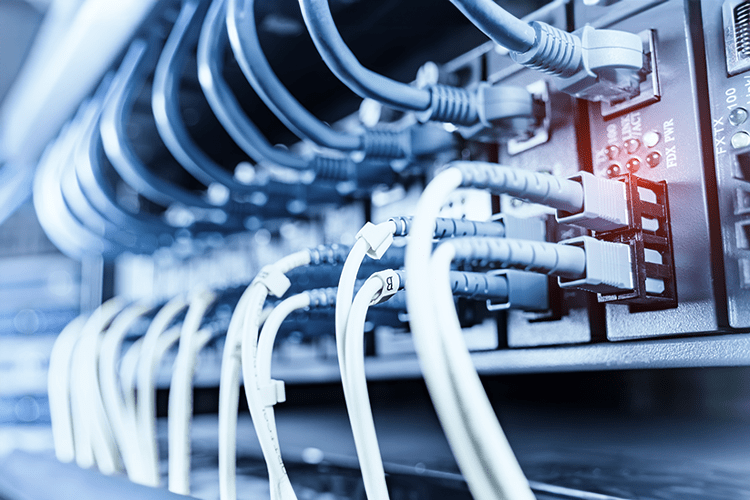
Fiber Optic Cabling for Scalability
Fiber optic cabling is becoming increasingly important for enterprise facilities, healthcare environments, educational campuses, warehouses, and multi-building commercial properties.
Fiber infrastructure offers:
- Extremely high bandwidth capacity for future expansion
- Long-distance connectivity without signal degradation
- Enhanced resistance to electrical interference
- Faster data transfer speeds for demanding applications
- Improved backbone connectivity between network rooms and buildings
Fiber is especially critical for organizations deploying high-capacity systems like video surveillance systems, cloud applications, and real-time communications across large facilities.
How Structured Cabling Supports Multiple Technologies Simultaneously
One of the biggest advantages of modern structured cabling solutions for businesses is the ability to support multiple critical systems from a unified infrastructure design.
Instead of building separate networks for every technology platform, structured cabling creates an organized, scalable environment that simplifies management and improves efficiency.
Distributed Antenna Systems (DAS)
Reliable indoor cellular coverage is now a business necessity. Commercial properties, hospitals, schools, and large office buildings increasingly require Public Safety DAS systems and cellular DAS infrastructure to support emergency communications and consistent mobile connectivity.
Structured cabling provides the backbone needed to support DAS deployment while simplifying future network expansion.
VoIP and Unified Communications
Modern VoIP systems rely heavily on network stability and bandwidth quality. Poor cabling infrastructure can create jitter, latency, and dropped calls that impact customer service and internal communications.
Proper cabling design ensures reliable connectivity for IP phones, conferencing systems, collaboration tools, and hybrid workforce communication platforms.
Security and Surveillance Systems
High-definition surveillance cameras require substantial bandwidth and reliable power delivery. Structured cabling allows businesses to support 4K surveillance, access control systems, remote monitoring, and AI-powered analytics without network bottlenecks.
Businesses implementing structured cabling solutions often experience improved surveillance reliability and simplified infrastructure management.
IoT and Smart Building Devices
IoT devices continue expanding across commercial properties. Smart lighting systems, occupancy sensors, environmental controls, access management, and building automation all depend on reliable network connectivity.
Without scalable cabling infrastructure, businesses may struggle to support future smart technology initiatives.
The Cost of Poor Cabling Installation
Some organizations attempt to reduce upfront costs by using low-cost installers or piecemeal network expansions over time. Unfortunately, poorly designed cabling systems often create much higher long-term expenses.
Common problems caused by improper installations include:
Frequent troubleshooting, cable congestion, inconsistent labeling, overheating network closets, failed certifications, signal interference, and expensive downtime.
Businesses may also face expensive retrofitting costs when outdated cabling cannot support future technologies.
A professionally designed structured cabling system improves:
Operational Efficiency
Organized infrastructure allows IT teams to quickly identify issues, perform upgrades efficiently, and reduce troubleshooting time.
Future Scalability
Businesses can add devices, expand departments, deploy new technologies, and increase bandwidth without rebuilding the network infrastructure from scratch.
Technology Integration
Structured cabling creates a unified platform capable of supporting security, communications, wireless networking, IoT, and cloud systems simultaneously.
Long-Term ROI
Although professional installations may require greater upfront investment, businesses often save substantial costs through reduced downtime, improved reliability, and longer infrastructure lifespan.
Why Professional Structured Cabling Design Matters
Commercial network infrastructure requires careful planning, certification testing, standards compliance, and long-term scalability considerations.
A professional structured cabling provider evaluates:
Facility layout, bandwidth requirements, future expansion plans, device density, power requirements, wireless coverage goals, and compliance standards.
This ensures the infrastructure is optimized not only for today’s operations but also for tomorrow’s growth.
Businesses that delay infrastructure upgrades often discover their cabling limitations only after major performance problems arise. By then, downtime, productivity loss, and emergency upgrades may cost significantly more than proactive planning.
Build a Stronger Business Foundation with TELECO
At TELECO, we specialize in structured cabling solutions for businesses designed to support modern communications, surveillance, DAS systems, VoIP, IoT devices, and future network expansion. Our experienced team provides professional site assessments, infrastructure planning, installation, testing, and long-term support for commercial environments of all sizes.
Whether your business is upgrading an aging network, preparing for 10Gbps connectivity, deploying advanced security systems, or supporting a hybrid workforce, TELECO delivers scalable cabling infrastructure built for reliability and performance.
Contact TELECO today to schedule a professional site assessment and discover how structured cabling can strengthen your entire business network infrastructure.
Frequently Asked Questions
What is structured cabling used for in a business?
Structured cabling provides a standardized network infrastructure that supports internet connectivity, VoIP systems, surveillance cameras, wireless access points, DAS systems, and IoT devices throughout a commercial facility.
How often should commercial cabling infrastructure be upgraded?
Most businesses should evaluate their cabling infrastructure every 10 to 15 years, especially when upgrading to higher bandwidth technologies or expanding network demands.
What is the difference between Cat6 and Cat6A cabling?
Cat6A supports higher bandwidth and longer-distance 10 Gigabit Ethernet performance compared to standard Cat6, making it better suited for modern commercial environments.
Why is fiber optic cabling important for businesses?
Fiber optic cabling delivers extremely fast data transfer speeds, greater scalability, and reliable long-distance connectivity for high-demand business applications.