Short answer: When a carrier retires its copper network in your area, traditional analog phone lines, often called POTS lines, are discontinued after the carrier gives notice. Any phones, fax machines, or devices still connected to those lines must move to a different service. For most businesses, copper landline retirement is the push to move voice calling to a cloud, hybrid, or on-premises VoIP phone system, ideally before a notice sets the deadline for you.
Why Is Copper Landline Retirement Happening Now?
Copper networks are decades old, expensive for carriers to maintain, and used by fewer customers every year. AT&T has said it plans to be largely off its copper network by the end of 2029, and in 2025 the FCC took steps to streamline how carriers retire copper facilities and discontinue legacy services. Other carriers are following similar paths, so businesses in many markets can expect changes over the next few years.
Which Business Phone Lines Are Affected?
Main numbers, direct lines, and fax lines
Any line that runs over copper to an analog phone system, a desk phone, or a fax machine may be affected. Businesses running older on-site phone systems connected to analog trunks are especially likely to need a plan.
Backup lines and lines you have forgotten
Many offices still pay for lines that were installed years ago for backup, a modem, or equipment that is no longer in use. A copper retirement is a good time to find and clean up those lines.
What about alarm panels, elevators, and other specialty lines?
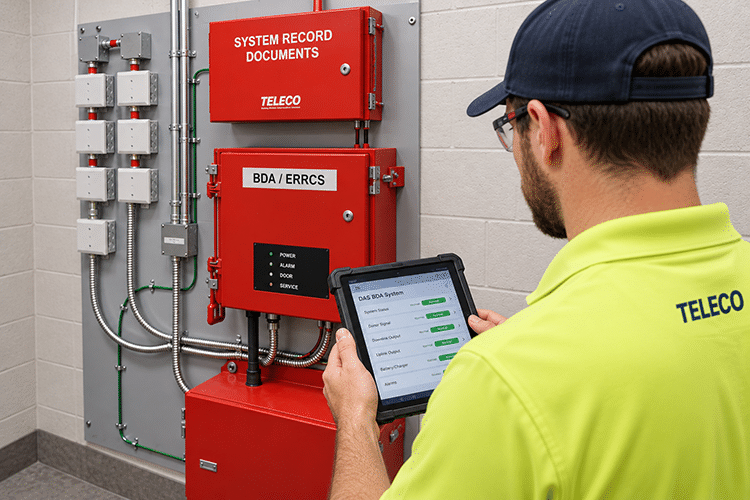
Lines connected to fire alarm panels, elevator emergency phones, and other life-safety equipment have their own requirements. Review those lines separately with the equipment provider, your alarm monitoring company, and your local authority rather than moving them along with standard business calling.
What Should Your Business Do About Copper Landline Retirement?
- Step 1: Inventory every line. Pull recent carrier bills and match each number to a phone, fax, or device.
- Step 2: Watch for carrier notices. Make sure notices from your carrier reach someone responsible for acting on them.
- Step 3: Check your network. Confirm your internet service and structured cabling can support voice traffic with good call quality.
- Step 4: Choose a deployment model. Decide whether cloud, hybrid, or on-premises calling fits your locations, users, and control requirements.
- Step 5: Plan the cutover. Schedule number porting, user setup, and training so customers never notice the change.
Which Phone System Should Replace Copper Lines?
The answer depends on how your team works. Cloud UCaaS combines voice, video, messaging, and presence in one platform with minimal on-site hardware. Hybrid systems pair cloud mobility with local survivability. On-premises systems such as Sangoma Switchvox keep hardware and software inside your facility for organizations that want full control. Our guide to UCaaS vs. VoIP explains the differences, and our article on legacy PBX to UCaaS migration walks through what moving from an older system involves.
How Does TELECO Help Businesses Move Off Copper?
TELECO has helped businesses modernize their communications for over 45 years. We design and install Sangoma business phone systems in cloud, hybrid, and on-premises configurations, with multi-location connectivity and advanced call routing, and we can handle the cabling and network work that supports them. Call TELECO at 800.800.6159 to review your current lines and plan your move away from copper.
Frequently Asked Questions
Is there a nationwide deadline for copper landlines to shut down?
No single nationwide deadline applies to every copper business phone line. Retirement schedules vary by provider, location, and service. Check your provider’s notices and ask whether the change affects the physical connection, your voice service, or both.
Can a business keep its phone numbers when replacing copper lines?
Businesses can often keep their numbers through number porting, subject to portability and service availability. Confirm eligibility with the new provider and keep the existing service active until the transfer is complete and incoming calls have been tested.
What services can replace a traditional copper business landline?
Options include cloud phone systems, IP-based voice services, compatible gateways, and specialized cellular or IP replacements. The appropriate choice depends on whether the line supports ordinary calls, faxing, alarms, elevator phones, or another application.
Will replacement phone service work during a power outage?
That depends on the replacement service and its backup arrangements. Internet-based phones usually require power for phones and network equipment. Backup batteries, alternate connectivity, and tested call forwarding can improve continuity, but the complete setup must be evaluated.