Modern warehouses run on mobile devices. Supervisors coordinate shifts by phone, drivers check in from the dock, managers approve orders through mobile apps, and employees rely on two-factor authentication to log in to business systems. Yet the same features that make a distribution center efficient, including steel racking, metal roofs, and tilt-up concrete walls, are exactly what block cellular signals. Cellular DAS for warehouses solves that problem by bringing strong, consistent carrier signal indoors, from the loading dock to the back office.
Why Warehouses Struggle With Indoor Cell Coverage
Outdoor cell towers were never designed to push signal through hundreds of thousands of square feet of metal and concrete. Even when coverage is strong in the parking lot, it can drop to nothing a few aisles in.
Building Materials and Racking Block Signal
Metal roofing, steel framing, and dense concrete reflect and absorb radio frequencies. Tall rows of stocked racking add another layer of interference, creating dead zones that shift as inventory moves. The result is dropped calls, failed app updates, and delayed communication in the areas where teams work most.
Dead Zones Slow Operations and Affect Safety
When a picker can’t reach a supervisor, or a driver can’t confirm a delivery window, work stops. Reliable cellular coverage also matters in an emergency, because employees need to be able to call for help from anywhere in the building. Consistent indoor signal supports both productivity and peace of mind.
How Cellular DAS for Warehouses Works
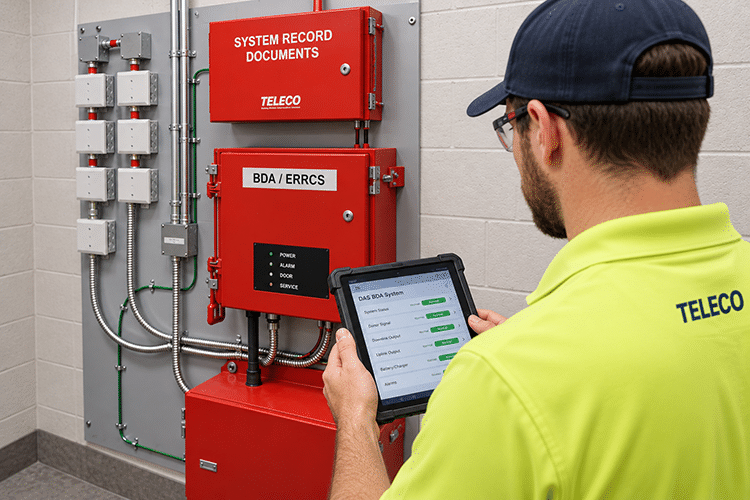
A distributed antenna system uses a network of small antennas placed throughout the facility to distribute carrier signal evenly, rather than relying on one outdoor source to reach every corner. Coverage is engineered around the actual layout, including high-bay storage, mezzanines, cold storage areas, and office space.
Cellular DAS and Wi-Fi Work Together
Many warehouses already rely on Wi-Fi for scanners and inventory systems. A cellular DAS complements that network by supporting employee and visitor phones on their own carriers, without adding load to the business Wi-Fi. For facilities with heavy traffic, TELECO can design systems that use both DAS and small cell technologies to add capacity.
The TELECO Cellular DAS Process
Every warehouse is different, so every system starts with data. TELECO follows a structured process to make sure coverage matches how the building is actually used:
- Benchmark testing with calibrated equipment to measure existing signal throughout the facility
- Custom design using AutoCAD and iBwave software, informed by professional DAS design and engineering
- Equipment procurement and testing before anything is installed
- Installation by certified technicians with minimal disruption to operations
- Post-installation validation to confirm coverage meets the design goals
Planning Ahead for New Construction and Expansions
The best time to plan a cellular DAS is before racking goes in or during an expansion. Early planning allows antenna placement and cabling pathways to be coordinated with the build, and DAS field testing can confirm performance once the facility is operating. As carriers continue expanding 5G, planning also helps make sure your building is ready for 5G indoors.
Why TELECO for Cellular DAS for Warehouses
For over 45 years, TELECO has designed and installed communications technology for commercial buildings, including warehouses, distribution centers, retail, healthcare, and education facilities. Our team handles the full project in-house, from site assessment and engineering to installation and validation, giving logistics operators one accountable partner.
Engineered Around Your Operation
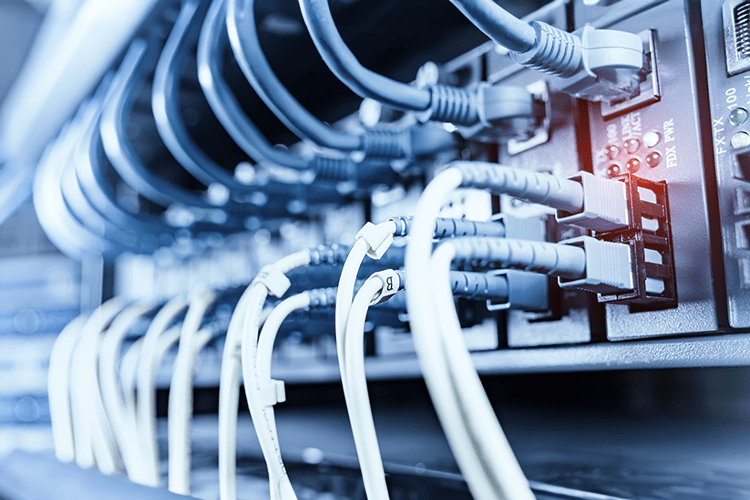
TELECO’s Cellular DAS solutions are custom designed for each facility, with attention to how people and inventory move through the space. We also offer Public Safety DAS, structured cabling, video surveillance, and access control, so a single partner can support the full technology picture inside your warehouse. Call 800.800.6159 to schedule a coverage assessment for your facility.
Frequently Asked Questions
What is a cellular DAS in a warehouse?
A cellular DAS is a network of small antennas installed throughout a warehouse to distribute carrier signal indoors. It gives employees and visitors reliable voice and data coverage in areas where metal, concrete, and racking block outdoor signal.
Why is cell reception so poor inside warehouses and distribution centers?
Metal roofs, steel framing, concrete walls, and tall stocked racking reflect and absorb radio signals. Large floor plates also put much of the space far from any exterior wall, so outdoor tower signal weakens before it reaches the interior.
Does a cellular DAS replace Wi-Fi in a warehouse?
No. Wi-Fi typically supports scanners, inventory systems, and business devices, while a cellular DAS supports mobile phones on their carriers. The two work together, and a DAS can reduce the need to route personal devices onto the business network.
Can a cellular DAS be added to an existing warehouse?
Yes. A DAS can be designed for an operating facility after a site survey and benchmark testing. Installation is planned around shifts and traffic patterns to limit disruption to daily operations.