NFPA 1225 Public Safety DAS compliance is quickly becoming a major requirement for commercial buildings in 2026. As fire codes and emergency communication standards continue to change, building owners, developers, hospitals, schools, hotels, and property managers are under growing pressure to provide reliable in-building emergency radio communication throughout their facilities.
Many modern buildings accidentally weaken or block emergency responder radio signals because of materials like reinforced concrete, metal framing, low-E glass, and energy-efficient insulation. When signal coverage is poor, firefighters and first responders may lose communication during emergencies, creating serious safety risks and possible code violations.
For commercial property owners, failing to meet NFPA 1225 Public Safety DAS compliance requirements can result in failed inspections, delayed occupancy approvals, costly fines, and increased liability risks. Addressing these requirements early helps protect your investment, your building, and the people inside it.
What NFPA 1225 Public Safety DAS Compliance Means for Buildings
NFPA 1225 Public Safety DAS compliance establishes the national standard for Emergency Responder Radio Communication Systems (ERRCS) inside commercial buildings. The standard was developed to improve emergency radio communication reliability and consolidate previous requirements previously covered under NFPA 72 and NFPA 1221.
The primary goal of the code is to ensure that police, firefighters, EMS teams, and emergency personnel maintain uninterrupted radio communication throughout a building during emergencies.
Buildings commonly affected by these requirements include:
- High-rise office buildings
- Hospitals and healthcare facilities
- Hotels and resorts
- Educational campuses and schools
- Industrial warehouses
- Mixed-use commercial developments
Many jurisdictions now require professional DAS field testing during construction or renovation projects to verify adequate radio signal coverage before occupancy approval is granted.
If signal levels fail to meet local code requirements, a Public Safety DAS system may be required to amplify and distribute emergency responder radio frequencies throughout the building.
Which Buildings Require In-Building Emergency Radio Communication Systems
 The demand for reliable in-building emergency radio communication continues increasing because modern building materials often weaken or completely block public safety radio signals. Even buildings with strong cellular service may still fail emergency radio coverage requirements.
Local Authorities Having Jurisdiction (AHJs) determine when a building must install a Public Safety DAS or ERRCS solution based on signal testing results and fire code standards.
Several factors commonly trigger compliance requirements:
- Large square footage and multi-floor layouts
- Underground parking garages or basements
- Dense concrete or steel construction
- Critical occupancy classifications
- Poor radio signal penetration from nearby public safety towers
Meeting ERRCS requirements involves much more than simply installing antennas. Systems must be professionally engineered to satisfy local radio coverage thresholds, survivability requirements, battery backup standards, and ongoing monitoring obligations.
Property owners who address compliance early during construction typically avoid expensive retrofits and project delays later in the approval process.
Understanding AHJ Inspections, DAS Field Testing, and Compliance Risks
The AHJ inspection process is one of the most important parts of achieving NFPA 1225 Public Safety DAS compliance. Local fire marshals and code officials use these inspections to verify that emergency responder radio communication systems meet required standards before a building can receive occupancy approval.
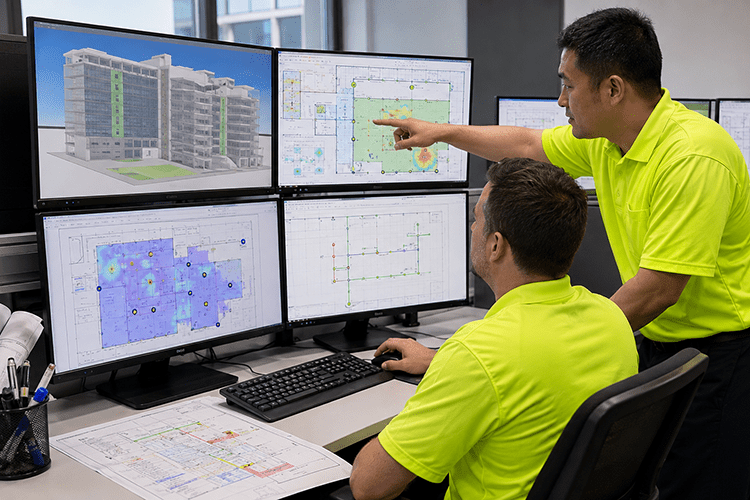
The process usually begins with a professional RF signal survey, where technicians test radio signal strength throughout the building to identify weak coverage areas. If signal issues are found, engineers may design a Public Safety DAS system that includes bi-directional amplifiers (BDAs), distributed antennas, backup power systems, and monitoring equipment to improve communication reliability.
After installation, comprehensive DAS field testing is performed to confirm the system provides reliable coverage throughout the property. Testing often includes stairwells, elevators, basements, parking garages, and mechanical rooms where signal loss is common. The AHJ then reviews the testing documentation and performs a final inspection to determine if the building meets compliance requirements.
Failing an AHJ inspection can create serious financial and operational problems for property owners and developers. Buildings that do not meet ERRCS requirements may face delayed certificates of occupancy, failed inspections, additional corrective work, and increased construction costs. In some cases, tenants may be unable to move into the property until compliance issues are resolved.
Non-compliance can also increase liability risks if first responders experience communication failures during an emergency. Additional engineering revisions, re-testing, and installation changes can further delay project timelines and increase overall costs.
Many jurisdictions also require ongoing annual testing and maintenance to ensure emergency communication systems continue meeting local fire code standards. Addressing compliance requirements early in the project helps reduce risks, avoid costly delays, and improve safety for both building occupants and emergency responders.
Why TELECO Is the Trusted Partner for Public Safety DAS Compliance
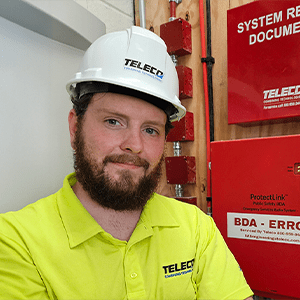 TELECO helps organizations achieve reliable NFPA 1225 Public Safety DAS compliance through professional engineering, DAS field testing, RF surveys, ERRCS system deployment, and ongoing compliance support.
Their experienced team works closely with property owners, contractors, engineers, and local AHJs to simplify the compliance process and reduce the risk of failed inspections. TELECO understands the complexities of ERRCS requirements and delivers solutions designed to meet both current code standards and long-term operational reliability.
From preliminary signal assessments to complete Public Safety DAS installations, TELECO provides the expertise necessary to help buildings maintain dependable in-building emergency radio communication coverage throughout every area of a facility.
Whether you are planning a new development, renovating an existing property, or preparing for an upcoming AHJ inspection, TELECO can help ensure your building is properly prepared for compliance in 2026.
Schedule your DAS compliance assessment with TELECO today and learn how professional testing and engineering support can help protect your building, occupants, and long-term investment. You can also explore TELECO’s additional business communication solutions and technology infrastructure services.
Frequently Asked Questions
What is NFPA 1225 Public Safety DAS compliance?
NFPA 1225 Public Safety DAS compliance refers to the code requirements that ensure emergency responders maintain reliable radio communication throughout commercial buildings during emergencies.
Which buildings usually require a Public Safety DAS system?
High-rise buildings, hospitals, hotels, schools, warehouses, and large commercial facilities commonly require Public Safety DAS systems if radio signal coverage is insufficient.
What happens during an AHJ inspection for DAS compliance?
The AHJ reviews signal testing reports, system performance, installation quality, and compliance documentation to verify that emergency radio communication requirements are satisfied.
Why is DAS field testing important for compliance?
DAS field testing verifies that emergency responder radio signals meet required coverage thresholds throughout the building, helping prevent failed inspections and occupancy delays.