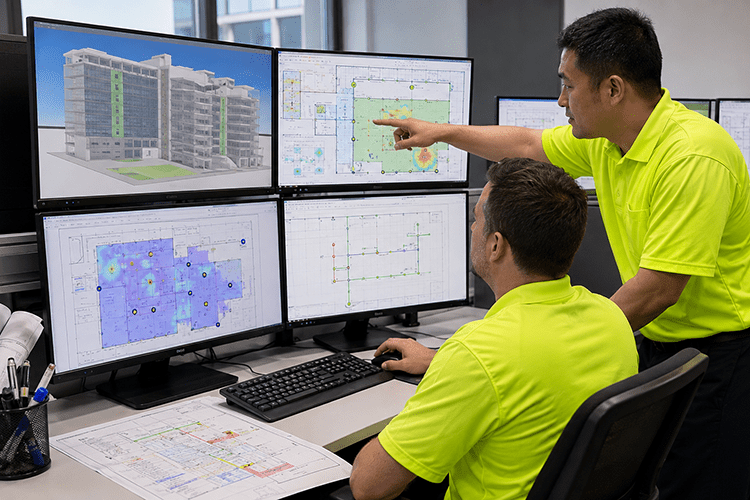
Public Safety DAS Requirements 2026 are reshaping how buildings are designed, renovated, and approved for occupancy. Modern construction materials such as reinforced concrete, low-emissivity glass, and steel framing significantly weaken radio signals used by firefighters, police, and emergency medical personnel. Without proper in-building radio coverage, first responders may lose communication during critical operations — creating unacceptable safety risks.
Authorities Having Jurisdiction (AHJs) increasingly enforce these requirements during plan review and final inspection. Failure to meet Public Safety DAS Requirements 2026 can delay a Certificate of Occupancy, trigger costly retrofits, or even result in penalties.
Why Reliable Emergency Communication Matters
During emergencies, coordinated communication saves lives. First responders rely on uninterrupted radio coverage to navigate buildings, relay conditions, and request assistance. Signal dead zones in stairwells, basements, parking garages, or mechanical rooms can create dangerous blind spots.
Public Safety DAS systems amplify and distribute radio signals throughout the entire structure, ensuring communication remains intact even in shielded areas.
Key Components Required for Compliance
Meeting Public Safety DAS Requirements 2026 involves more than installing antennas. Systems must be engineered, tested, and documented to demonstrate reliable performance.
- Bi-Directional Amplifiers (BDAs) to boost radio signals
- Distributed Antenna Network to carry signals throughout the building
- Battery backup to maintain operation during power outages
- System monitoring with alarms for faults or failures
Many jurisdictions also require NEMA-rated enclosures, fire-rated cabling, and remote annunciators for fire command centers.
Buildings Most Likely to Require Public Safety DAS
While requirements vary, larger or more complex structures are most affected. High-rise buildings, underground facilities, hospitals, airports, schools, and large commercial complexes commonly require systems to pass inspection.
- Structures exceeding specific square footage thresholds
- Buildings with underground levels or parking garages
- Facilities with life-safety risk concentrations
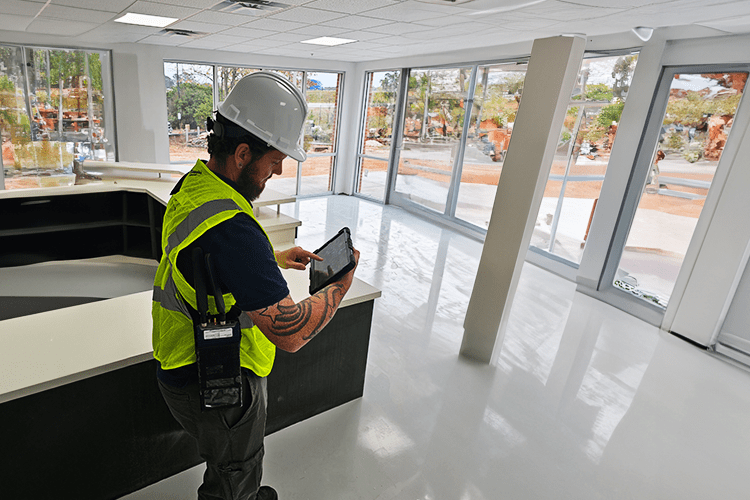
New construction projects typically address these requirements during design, but existing buildings often discover the need only after failing a radio coverage test.
The Role of Testing and Documentation
Verification is critical. Authorities do not rely on system specifications alone — they require field testing to confirm performance. Testing evaluates signal strength across a grid of locations to ensure coverage meets defined thresholds.
Comprehensive documentation demonstrates compliance and supports final approval. Without it, even a properly installed system may not pass inspection.
Planning Ahead Prevents Costly Delays
Integrating Public Safety DAS Requirements 2026 early in project planning is far more cost-effective than retrofitting later. Late installation can involve invasive construction, additional engineering, and extended timelines.
Proactive planning provides:
- Predictable budgets and schedules
- Reduced risk of inspection failure
- Improved safety for occupants and responders
How TELECO Inc. Supports Public Safety DAS Compliance
TELECO Inc. delivers end-to-end Public Safety DAS solutions, including design, installation, testing, and documentation. Their team works closely with building owners, contractors, and AHJs to ensure systems meet Public Safety DAS Requirements 2026 and pass inspection the first time.
With experience across commercial, healthcare, education, and government facilities, TELECO helps organizations protect lives while avoiding costly project delays.
Frequently Asked Questions
Which buildings are required to install Public Safety DAS systems?
Requirements depend on size, construction type, and local codes, but many large or complex buildings must demonstrate adequate radio coverage.
Can an existing building be retrofitted with Public Safety DAS?
Yes. Older buildings that fail testing can install systems to improve coverage and achieve compliance.
How long does approval testing take?
Testing duration varies by building size, but it typically occurs over several hours or days depending on complexity.
Is Public Safety DAS the same as cellular DAS?
No. Public Safety DAS supports emergency radio frequencies, while cellular DAS improves mobile phone service.