Wireless dead zones rarely start as a technology problem. They start as a planning problem. Long before a building opens its doors, decisions about wall materials, floor layouts, and mechanical rooms quietly determine whether cell signal and emergency radio communication will work once tenants move in. That is exactly why DAS design and engineering needs to happen at the blueprint stage, not after the drywall goes up and someone notices the signal is bad.
For developers, architects, and property owners, understanding how professional DAS design and engineering fits into a construction timeline can mean the difference between a building that performs from day one and one that requires an expensive, disruptive retrofit.
What Is DAS Design and Engineering?
A Distributed Antenna System, or DAS, is a network of antennas, cabling, and signal sources engineered to distribute wireless coverage evenly throughout a building. DAS design and engineering is the process of planning that system before it is installed: modeling how radio frequency signals will travel through a building’s specific materials, layout, and structure, then designing an antenna and cabling architecture that delivers reliable coverage in every space that needs it.
This is not a one-size-fits-all exercise. A hospital, a high-rise office tower, and a distribution warehouse each present different signal propagation challenges, different code requirements, and different occupancy patterns. Professional DAS design and engineering accounts for all of it before a single antenna is mounted.
The Core Steps in a DAS Design Process
- Building survey and stakeholder consultation to understand layout, materials, and coverage goals
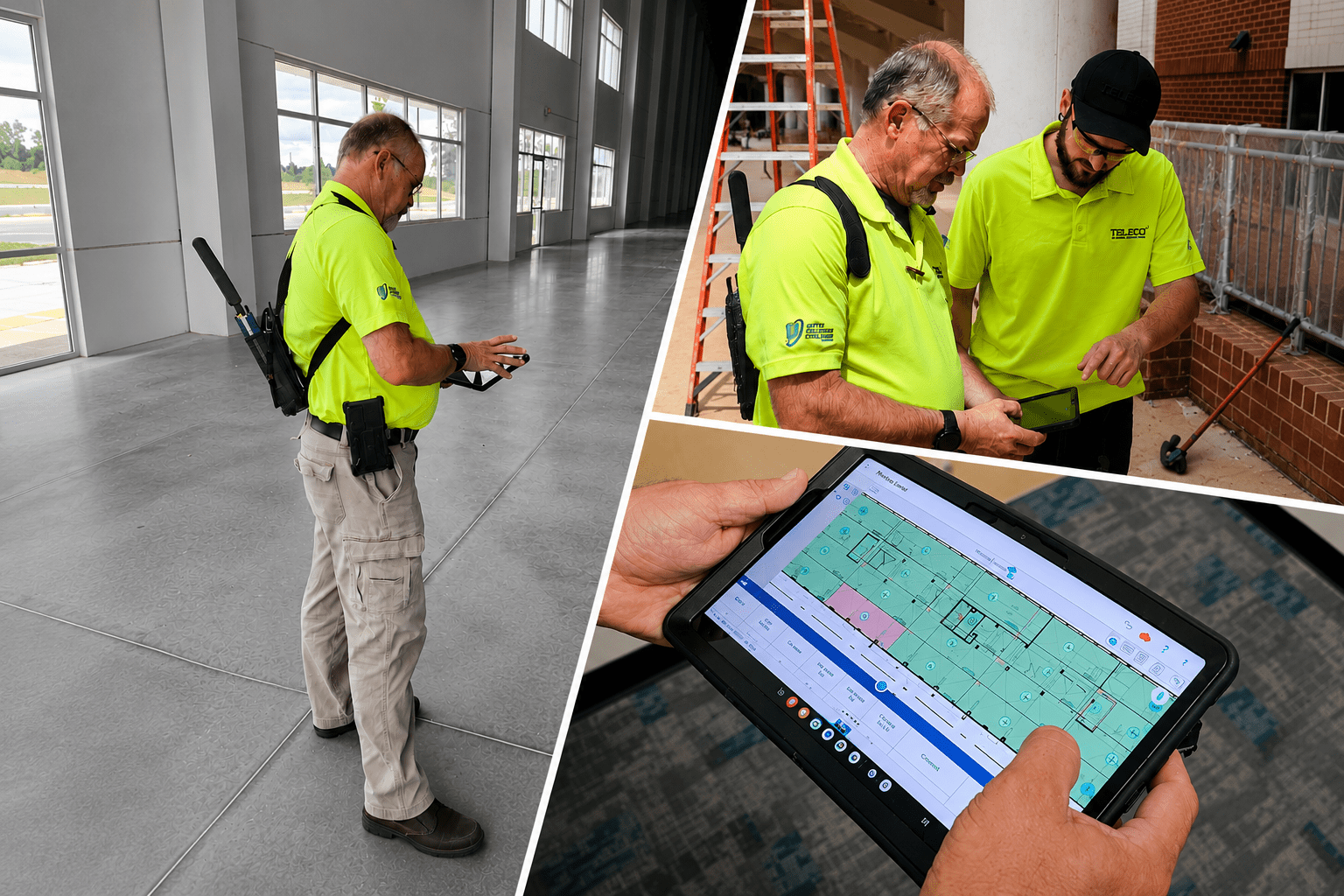
- Benchmark signal survey to measure existing ambient wireless conditions floor by floor
- 3D RF modeling using industry-standard design software to predict signal propagation and identify coverage gaps
- Equipment selection based on building size, frequency requirements, and carrier or public safety needs
- Coordination with architects, general contractors, and the Authority Having Jurisdiction (AHJ) on cable pathways and equipment room placement
- Post-installation testing and as-built documentation to confirm the system performs as designed
Why Pre-Construction Planning Changes the Outcome
Modern building materials that improve energy efficiency, including low-E glass, reinforced concrete, and metal framing, are also excellent at blocking radio signals. Buildings designed without wireless infrastructure in mind frequently discover coverage failures only after construction is complete, when fixing the problem means opening finished walls, rerouting cable pathways around completed mechanical systems, and coordinating disruptive retrofit work around occupied space.
When DAS design and engineering is integrated into the architectural process from the start, several things become possible that are difficult or impossible after the fact:
Coordinated Cable Pathways
Conduit and cable runs can be planned alongside electrical and mechanical systems instead of squeezed in around them later.
Accurate Coverage Modeling
Engineers can model the building’s actual materials and layout rather than guessing based on a completed structure.
Code Compliance From Day One
Both commercial cellular DAS and public safety DAS systems can be engineered together, avoiding the frequency conflicts and inspection delays that come from bolting on a public safety system after the fact.
Commercial DAS vs. Public Safety DAS Design Considerations
A well-engineered building typically needs two distinct wireless systems that must be planned to coexist without interference. Commercial DAS handles day-to-day carrier connectivity for tenants, employees, and visitors. Public safety DAS is a code-mandated system dedicated to first responder radio communication, engineered to stricter coverage and survivability standards under codes like NFPA 1225.
Design engineers must separate these systems’ frequencies and equipment paths while still coordinating shared infrastructure like conduit and equipment rooms. Attempting to retrofit a public safety system into a building designed only for commercial DAS is one of the more expensive corrections a property owner can face, particularly if it surfaces during a fire marshal inspection rather than during design review.
The Cost of Skipping the Design Phase
Skipping proper DAS design and engineering does not eliminate the need for wireless infrastructure. It only delays the expense and adds complexity. Retrofitting antennas and cabling into finished walls typically costs significantly more than planned installation, often requires temporary tenant disruption, and can still fail to achieve the coverage quality that would have been standard with upfront design.
Properties that skip this step also tend to discover the gap at the worst possible time: during a permit inspection, after a tenant complaint, or in the middle of an emergency when a DAS field test reveals coverage that does not meet code.
How TELECO Approaches DAS Design and Engineering
TELECO has spent over 45 years helping commercial property owners, developers, and facility managers build the wireless infrastructure their buildings need, before problems surface rather than after. Our engineering team works directly with architects, general contractors, and AHJs from the earliest planning stages, using industry-standard RF modeling tools to design systems tailored to each building’s materials, layout, and occupancy.
As a business technology company founded in 1981, TELECO brings decades of experience across in-building wireless design, video surveillance, and the full range of technology systems a modern commercial building depends on. We do not treat DAS design as an isolated project. We treat it as one piece of a coordinated technology infrastructure plan, engineered to work correctly the first time and to scale as your building’s needs evolve. Whether you are breaking ground on new construction or planning a major renovation, TELECO’s engineers bring the technical expertise to get wireless design right from the blueprint stage forward.
Frequently Asked Questions
When should DAS design and engineering start in a construction project?
Ideally, wireless design should begin alongside the architectural and MEP planning phases, well before construction begins. Involving DAS engineers early allows cable pathways, equipment rooms, and antenna locations to be built into the design instead of retrofitted later, which reduces both cost and construction disruption.
How much does it cost to add DAS after a building is already constructed?
Retrofit costs vary widely by building size and construction type, but they are consistently higher than planned pre-construction installation. Finished walls must be opened, cable pathways rerouted around completed systems, and work often has to happen around occupied tenant space, all of which add labor, materials, and schedule risk that upfront planning avoids.
What is the difference between commercial DAS and public safety DAS design?
Commercial DAS is designed to extend cellular carrier signal for everyday use by tenants, employees, and visitors. Public safety DAS is a separate, code-mandated system built specifically for first responder radio communication, engineered to stricter coverage, survivability, and backup power standards. Both can share some infrastructure but must be designed with separate frequency paths.
Do all commercial buildings need professional DAS design?
Not every small building requires a full engineered DAS, but any building with reinforced concrete, low-E glass, extensive metal framing, underground levels, or public safety code requirements should have a professional signal assessment. Larger and taller buildings, hospitals, and government facilities almost always require engineered systems to meet both connectivity expectations and code.